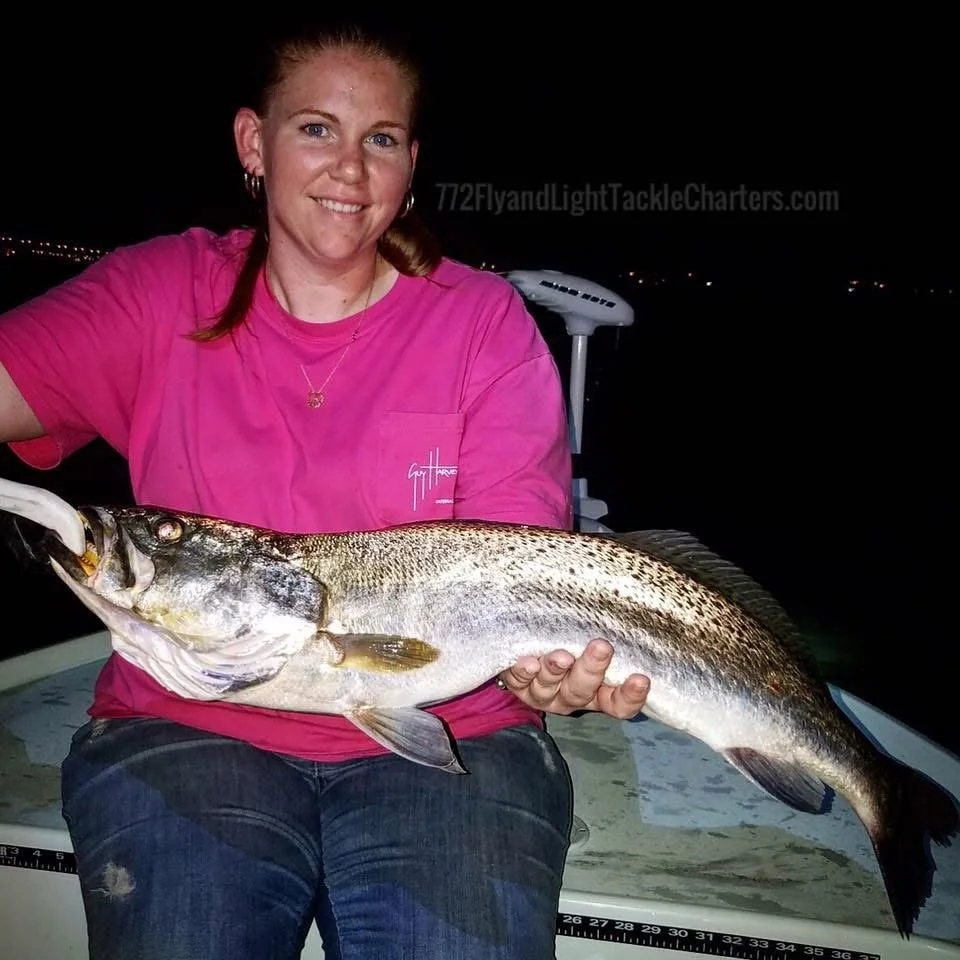
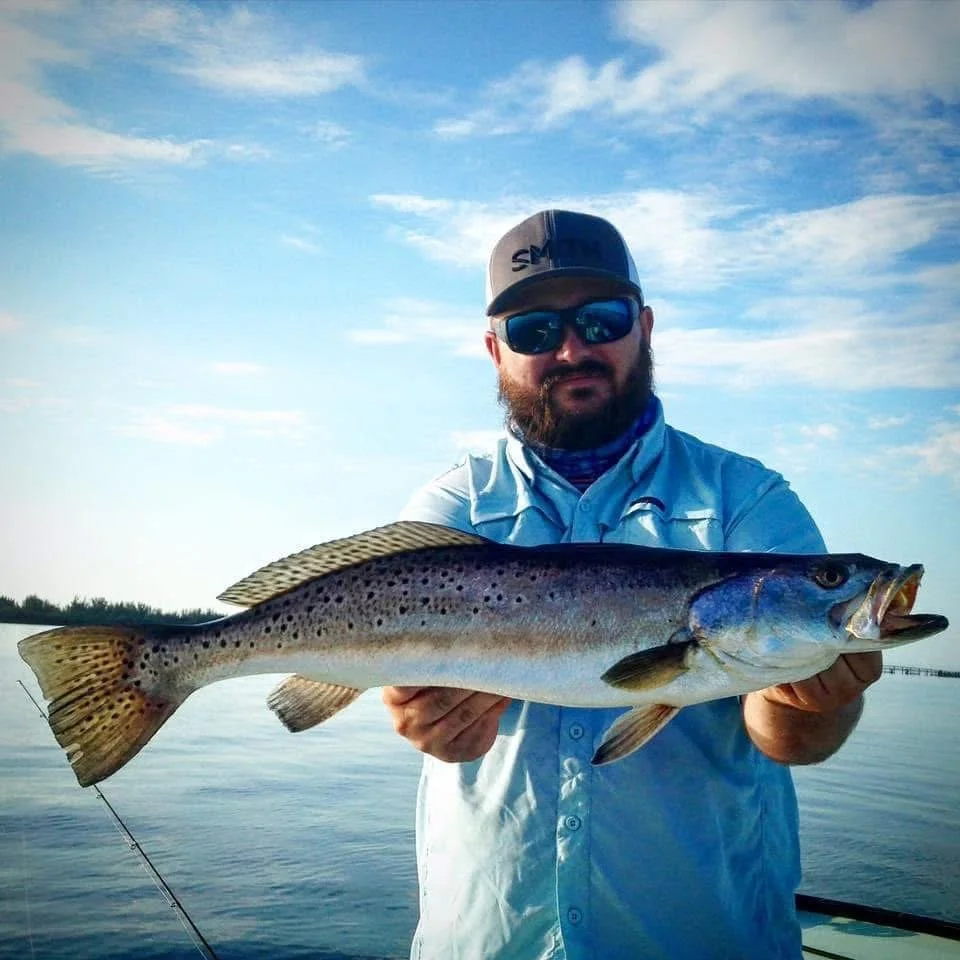
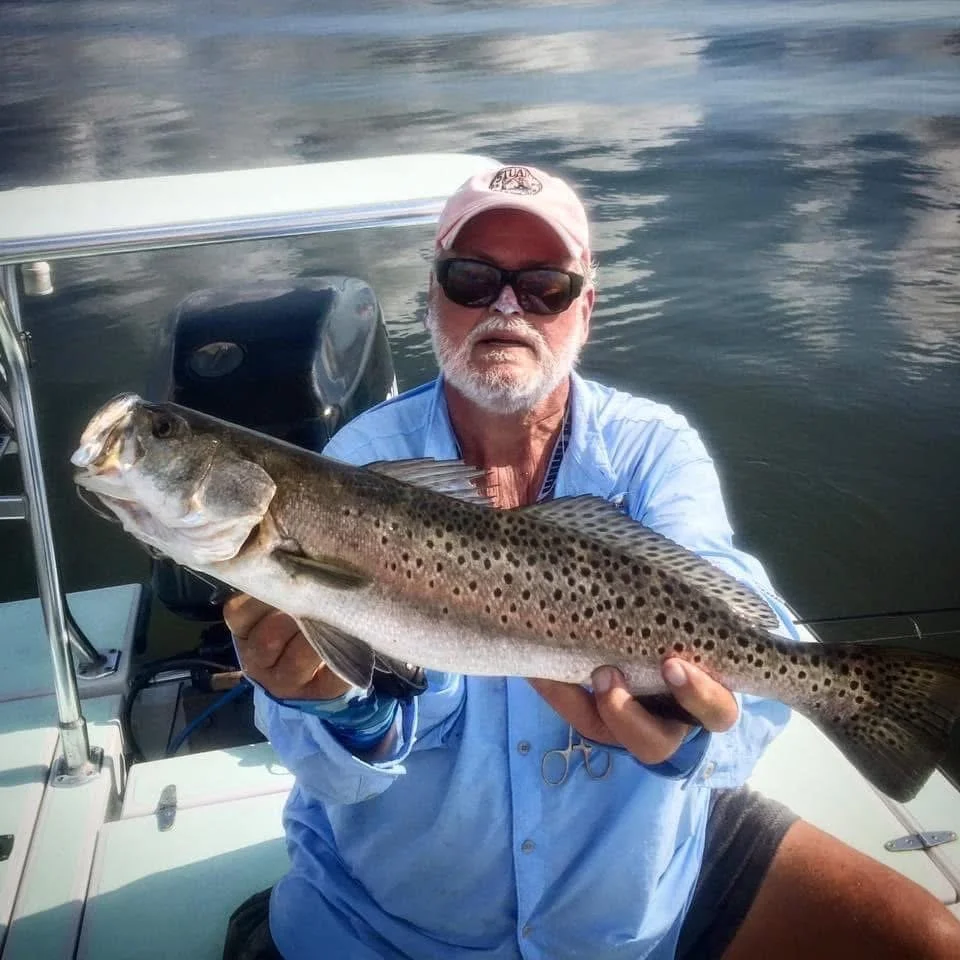
Where to Fish for Winter Trout on the Treasure Coast
Location is everything after a cold front. One of the most overlooked but critical factors is finding bait near deep water. On the Treasure Coast, trout will almost always set up where bait schools are close to depth changes. Look for mullet, glass minnows, or shrimp holding along deeper channels adjacent to flats, drop-offs near grass edges, creek mouths dumping into larger bodies of water, and residential canals with depth and minimal current. If bait is present near deep, stable water, odds are good trout are close by and actively feeding—just not aggressively.
Winter trout fishing is not about covering water quickly. It’s about slowing down and fishing methodically through high-percentage areas where trout are already positioned.
Winter Techniques: Slow, Subtle, and Intentional
Cold-water trout are sluggish, which means your presentation must match their energy level. Fast retrieves and aggressive lure actions will often push fish away. Instead, focus on slow jigging, extended pauses, and subtle movements. Crawling a jig along the bottom, lightly hopping it, or barely twitching a soft plastic allows the lure to stay in the strike zone longer and imitates lethargic prey—exactly what trout expect to see in winter conditions.
Live Bait for Winter Trout
Live bait shines after a cold front because it checks every box: natural scent, natural vibration, and natural movement.
• Live shrimp are a winter staple and extremely effective under a popping cork or free-lined along deeper edges.
• When targeting larger “gator” trout over numbers, pinfish, white bait, or small mulletare excellent options, especially near deeper structure.
Why Scented Baits and Gulp Excel After a Cold Front
One of the most important adjustments anglers can make in winter is switching to scented and “alive-feeling” baits. Speckled sea trout have a highly developed sense of smell. Their nostrils are used exclusively for detecting chemical cues in the water, allowing them to identify food even when they aren’t actively hunting by sight. After a cold front, trout rely heavily on their lateral line and olfactory system, using vibration and scent to confirm whether something is worth eating.
This is why baits like Gulp, scented soft plastics, cured baits, and live bait consistently out-perform unscented artificials in cold water. Even when sitting still, these baits continue to disperse scent and create subtle water displacement. In winter, trout may follow a bait longer, inspect it closely, and only commit once it “smells right.” Scented baits increase how long a trout holds onto a lure, resulting in better hook-up ratios when bites are light and subtle.
The Importance of Long, Light Leaders for Post-Front Trout
Leader choice becomes critical after a cold front. These conditions typically bring higher barometric pressure, calmer winds, clearer water, and more pressured, cautious fish. Trout have time to inspect your offering, and anything unnatural—heavy leader, poor movement, or excessive splash—can result in refusals.
Downsizing your leader allows your bait to move freely and look natural. I strongly recommend running 10- to 20-pound fluorocarbon leaders, with an emphasis on the lighter end in clear water. Just as important is leader length. Running longer leaders—often as long as practical—creates more separation from your braid and significantly reduces the chance of spooking sensitive fish. In winter, stealth matters, and long, light leaders are one of the simplest ways to increase bites.