Wintertime Bluefish Fishing in Stuart, Florida
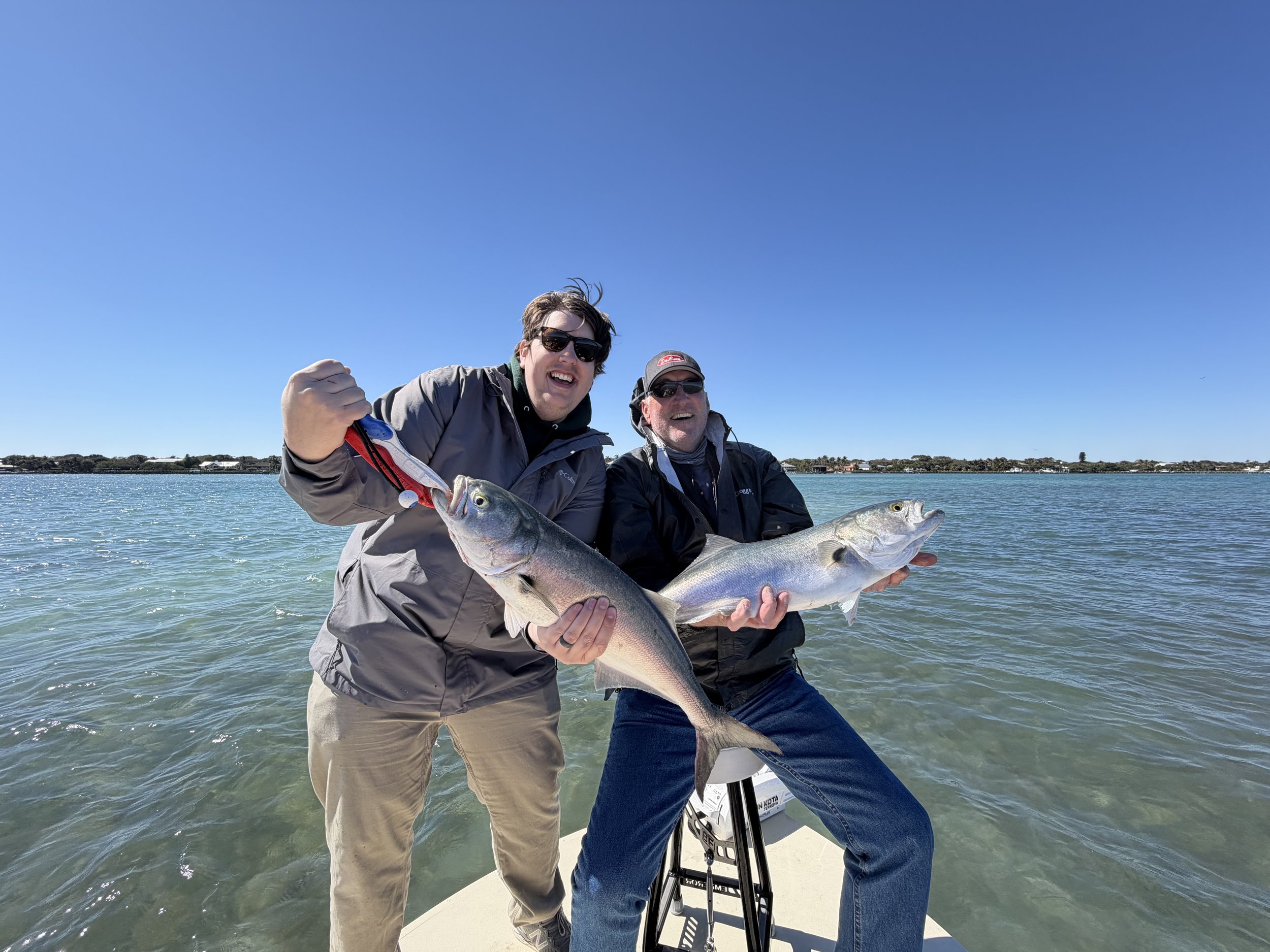
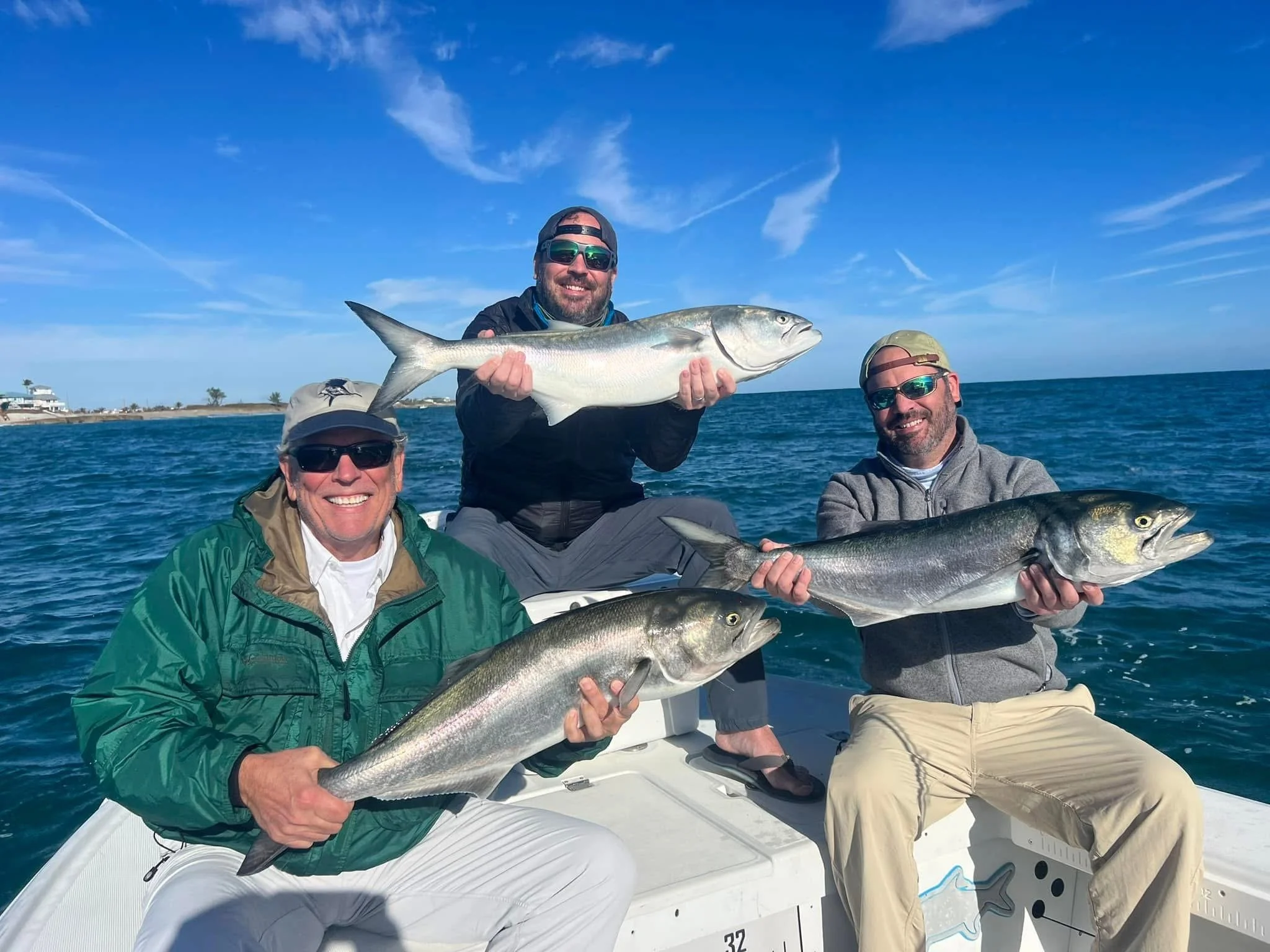
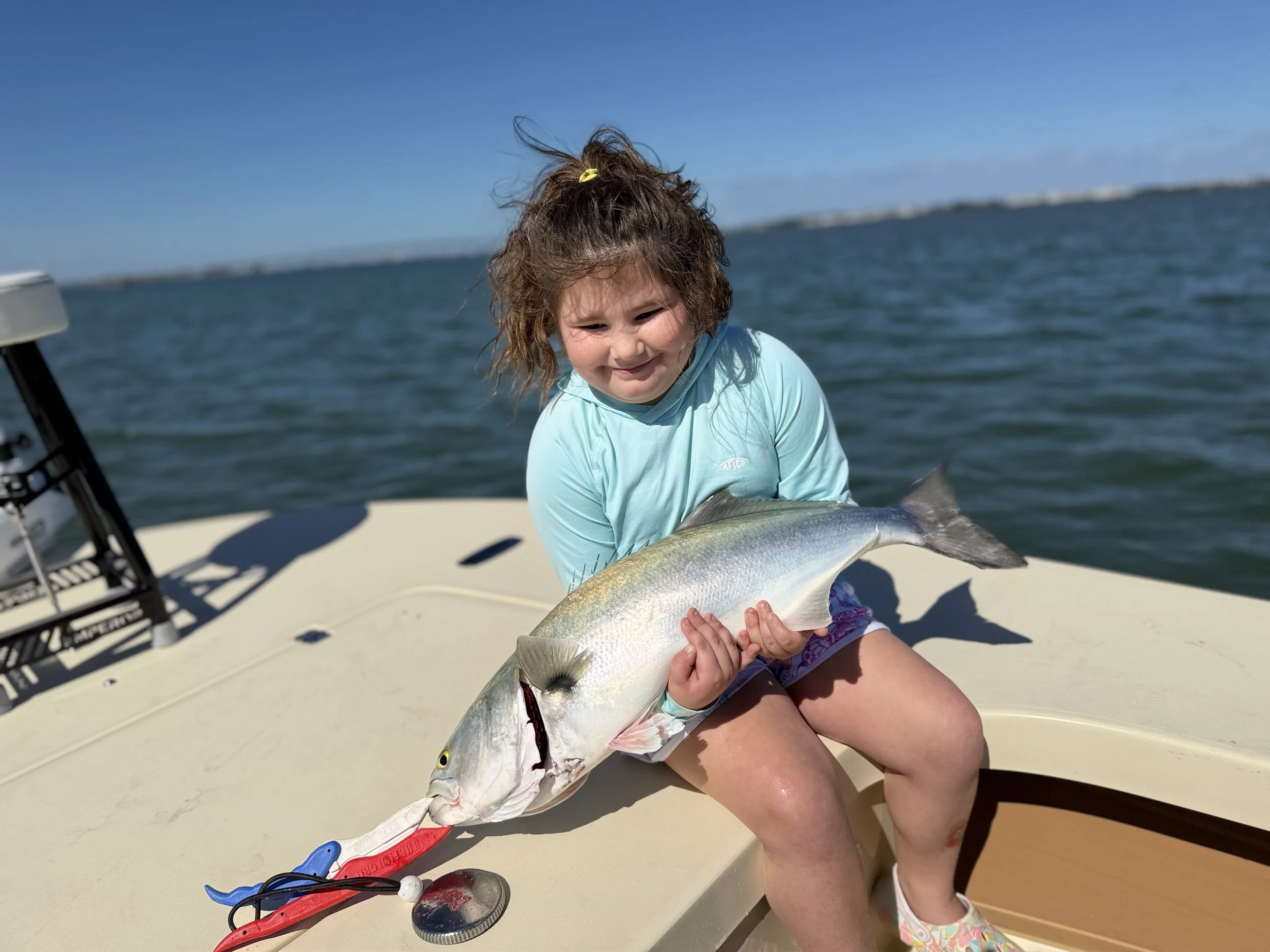
Winter is prime time for bluefish on Florida’s Treasure Coast, and when they show up, they do so in force. Bluefish (Pomatomus saltatrix) are a migratory species that move south from the Northeast as water temperatures drop, stacking along Florida beaches, inlets, and nearshore waters during the winter months. Here in Stuart, the peak bite typically occurs in February and March, when massive schools of fish ranging from 1 to 20 pounds push bait tight to shore. Florida’s state-record bluefish—22 pounds, 2 ounces—was landed just up the road at Jensen Beach, underscoring the true trophy potential of this winter fishery. Bluefish are aggressive, competitive feeders that track mullet and pilchard schools, and once located, anglers can experience fast-paced action with multiple hook-ups in short order.
From a tactics standpoint, bluefish are tailor-made for visual, high-energy fishing. Topwater poppers worked aggressively across the surface are my favorite, often triggering violent surface strikes that turn a calm school into a full-blown feeding frenzy. Spoons, swimbaits, and other fast-moving lures are equally effective, though expect to replace soft plastics often due to their razor-sharp teeth. A typical setup includes 20-lb braided line paired with a 50–60 lb monofilament leader, and in some situations a short section of 40-lb titanium wire helps prevent bite-offs without sacrificing too much action. Bluefish can be found anywhere from the beach and inlet to flats, docks, and dock lights, and once hooked they’re known for long runs, aerial jumps, and bulldogging power. While often mislabeled as “trash fish,” bluefish can be excellent table fare when handled properly—bleed the fish immediately, ice it down, remove the bloodline during filleting, and consider marinating overnight. Fried bluefish is a standout, though grilling or baking works just as well for this rich, oily, and underrated winter species.