October Fly Fishing Report: Jensen Beach to Wabasso, Florida
772 Fly & Light Tackle Charters | Treasure Coast Fly Fishing Report
October is one of my favorite transition months for fly fishing along Florida’s Treasure Coast. From Jensen Beach north through Fort Pierce, Vero Beach and Wabasso, October can provide an incredible variety of opportunities for anglers looking to target fish strictly on fly.
This time of year is unique because we are transitioning out of our summertime fishing patterns while still experiencing the tail end—and sometimes some of the best portions—of our annual fall mullet migration.
The result can be an interesting combination of fisheries.
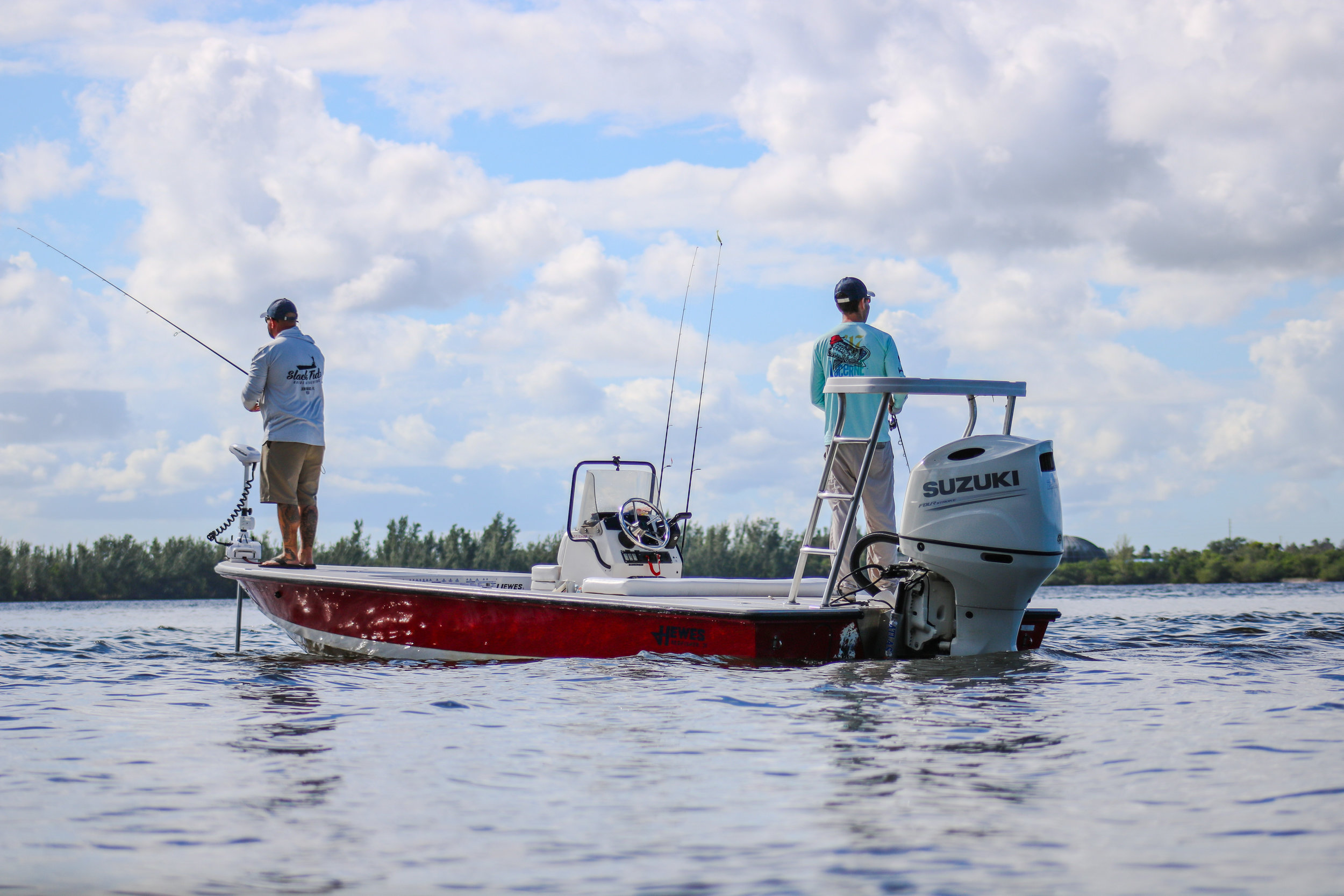
One morning we may be throwing a large mullet imitation at a tarpon or snook crashing bait on the surface. The next morning we may be quietly poling a grass flat and presenting a small shrimp or baitfish pattern to a redfish or sea trout.
That diversity is exactly what makes October fly fishing on the Indian River Lagoon so much fun.
THE OCTOBER TRANSITION
October is not necessarily one fishing pattern from beginning to end.
Early October can still resemble September. We typically have mullet moving throughout the Indian River Lagoon, around the bridges, along mangrove shorelines and through deeper channels. Wherever those concentrations of bait develop, predators are usually not far behind.
Snook, tarpon, jack crevalle and sea trout can all take advantage of the abundance of bait.
As we progress farther into October, however, the first changes toward our cooler-weather fishing patterns begin becoming noticeable.
Our water temperatures gradually start dropping. Days become shorter. Cold fronts eventually begin pushing through Florida, and different forage starts becoming more important.
This is when fly selection can become particularly important.
During periods with large amounts of mullet around, there is absolutely nothing wrong with throwing a substantial fly. But as we transition away from the peak of the mullet run, downsizing can become extremely effective.
Instead of trying to force one pattern to work throughout the entire month, we want to match the available forage and adjust our presentation to the conditions we’re actually seeing that day.
MULLET RUN FLY FISHING
The fall mullet migration is still one of the biggest factors influencing our October fishing.
Large schools of mullet moving through the Indian River Lagoon can attract almost everything that swims.
For a fly fisherman, however, fishing around thousands of mullet presents an interesting challenge.
Your fly is competing against an enormous amount of natural food.
Rather than simply throwing directly into the center of a giant school of bait, I frequently prefer to work the outside edges of the school, isolated groups of mullet or areas where predators are actively pinning bait against structure.
Pay attention to seawalls, mangrove points, docks, deeper edges and current lines.
A snook doesn’t necessarily want to swim through several thousand perfectly healthy mullet trying to select one fish. Predators frequently look for the baitfish that has separated from the group, appears injured or is trapped against structure.
That is exactly what we want our fly to represent.
Productive October Mullet Patterns
Some of my preferred styles of flies for this situation include:
EP-style baitfish and mullet patterns — Excellent when we need a larger profile without creating an excessively heavy fly. These can be tied to imitate both finger mullet and larger adult mullet.
Game Changers and articulated baitfish patterns — When you need movement and a substantial profile, articulated flies can be extremely effective around larger snook and tarpon.
Deceiver-style baitfish patterns — One of the most versatile saltwater fly patterns ever created. They can be tied small or large and adapted to whatever size bait we’re seeing.
Gurgler and surface patterns — Early morning and low-light conditions can provide some spectacular surface fishing. A fly that pushes water can get noticed when fish are feeding aggressively around mullet.
The biggest lesson is simple:
Don’t automatically throw the largest fly in your box because it’s October. Match the bait.
Some years we see considerably smaller finger mullet. Other times there are large mullet everywhere. Look at what is actually swimming around the boat and choose your fly accordingly.
OCTOBER SNOOK ON FLY
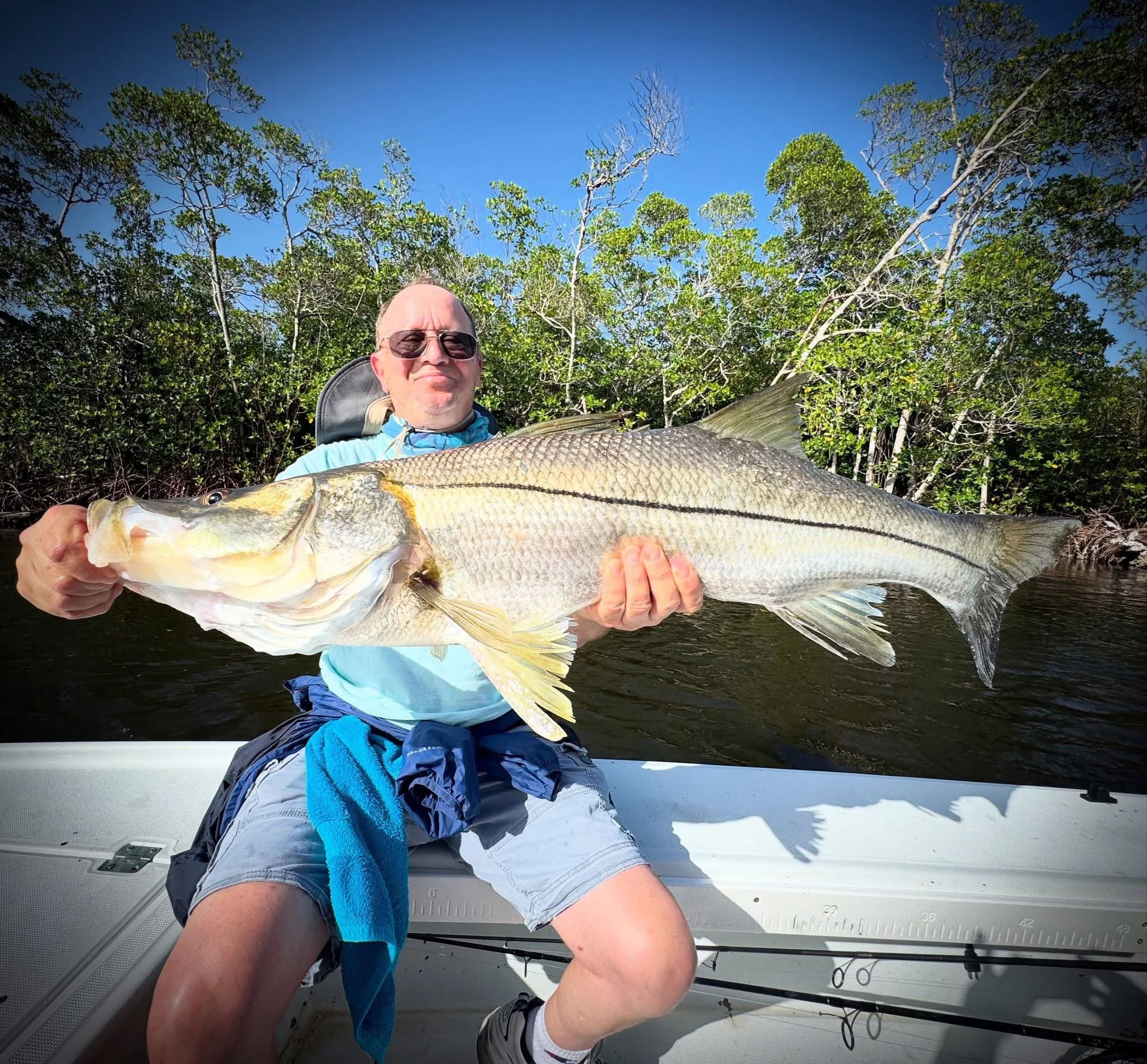
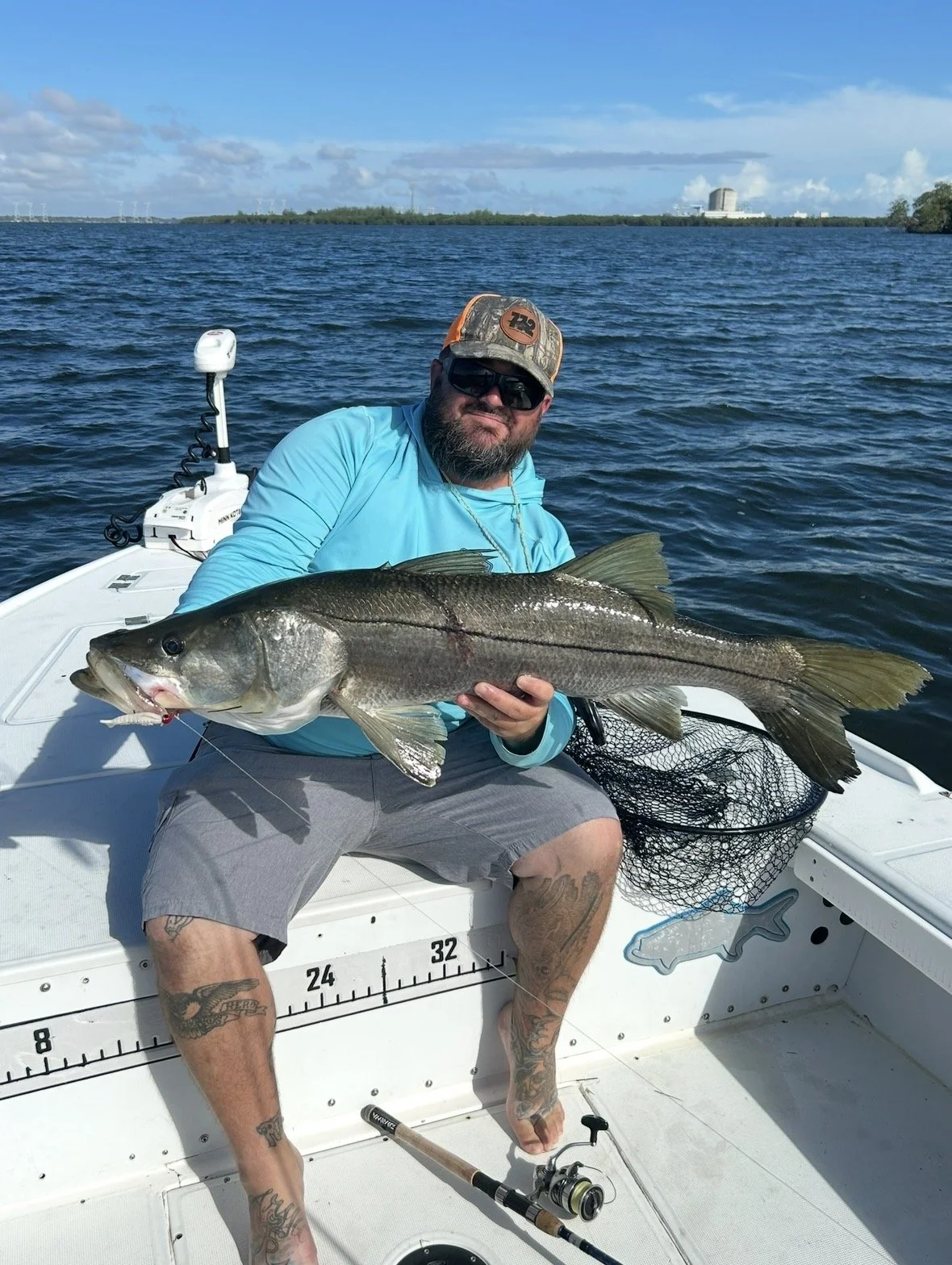
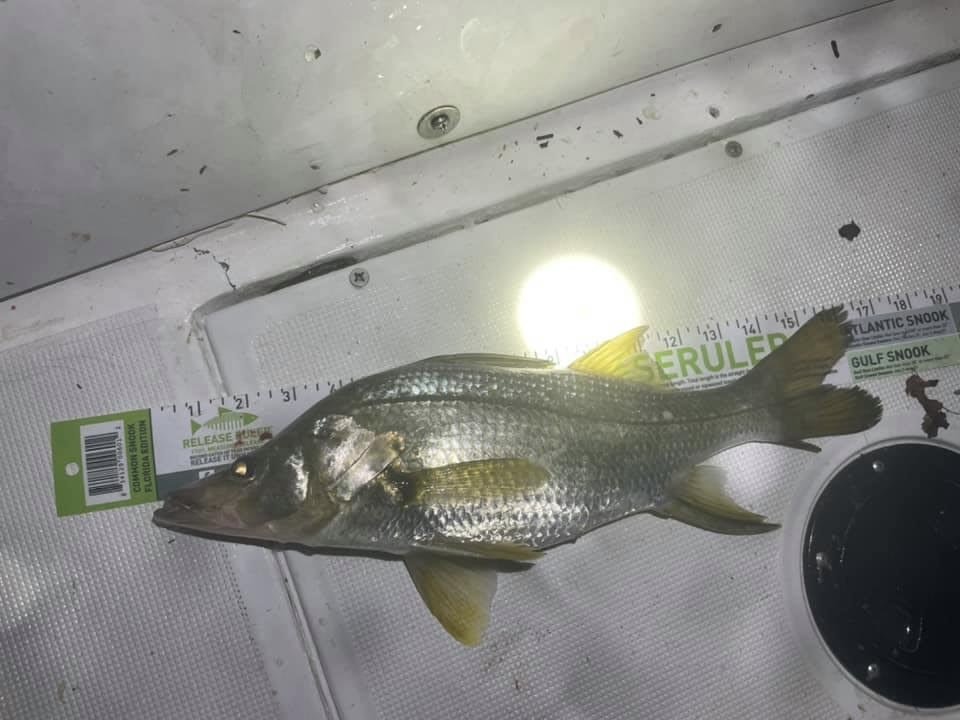
Snook remain one of our primary targets throughout October.
As the summer spawning period comes to an end, many fish begin transitioning away from the inlet and beach environments and redistribute throughout the Indian River Lagoon.
That creates opportunities around mangrove shorelines, docks, seawalls, bridges, channels and flats.
Low-light periods can be especially productive.
First light is one of my favorite times to cover water with a fly. When the sun is still low and bait is active, snook tend to be considerably more comfortable leaving structure and feeding aggressively.
Once the sun gets higher, the game can change.
Instead of covering large amounts of open water, we may begin concentrating on shade, mangrove overhangs, deeper edges, docks and other ambush points.
Snook Fly Selection
For snook during October, I generally want several different options available:
3- to 5-inch baitfish patterns for general-purpose fishing.
Larger mullet-profile flies when big mullet are present.
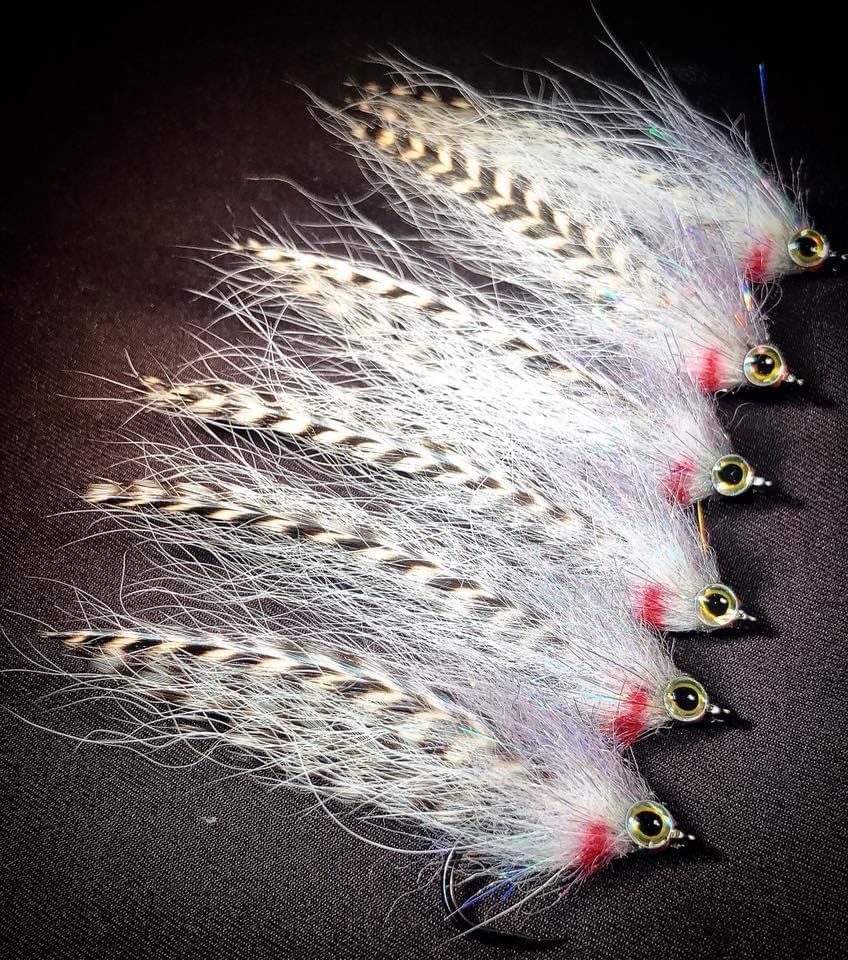
Small glass-minnow patterns when snook are keyed in on tiny bait.
Gurglers and topwater flies for early morning, evening and aggressive fish.
Clouser-style minnows when we need to get deeper in current or along channel edges.
Fly color is important, but I believe profile, movement, sink rate and presentation are usually more important.
In clean water and bright conditions, natural colors can be excellent. In dirty water, low light or nighttime situations, darker silhouettes and flies that push more water can become extremely effective.
TARPON ARE NOT FINISHED
One misconception I hear is that once summer is over, our tarpon fishing is finished.
That simply isn’t always the case.
October can still provide opportunities for tarpon throughout the Indian River Lagoon, particularly when large concentrations of mullet are present.
These fish can range dramatically in size.
We may encounter smaller juvenile tarpon one day and substantially larger fish the next. There are years when October produces some very impressive adult tarpon in the lagoon.
The biggest factor is often timing the feeding window.
You can watch tarpon rolling for an hour without getting a serious reaction, and then suddenly the tide changes, bait moves and the entire area comes alive.
Those feeding windows can sometimes be short.
When that happens, being prepared matters.
October Tarpon Flies
For mullet-feeding tarpon, larger baitfish patterns can be extremely effective.
I like flies that provide a noticeable profile without becoming impossible to cast.
Tarpon Toad-style flies, EP baitfish, Deceivers, Game Changers and larger baitfish patterns all have their place.
For larger fish, I also want hooks and connections that I trust completely.
October is not the time to discover that the hook on your favorite fly isn’t strong enough.
REDFISH — ESPECIALLY AS WE MOVE NORTH
As we work north from Jensen Beach through Fort Pierce, Vero Beach and toward Wabasso, redfish become an increasingly important part of the conversation.
October can provide opportunities to find reds around mangrove shorelines, grass flats, islands, potholes and shallow edges.
This is where fly fishing becomes much more visual.
Instead of repeatedly casting an area hoping to locate fish, we’re often poling quietly and looking.
We’re searching for pushes, wakes, tails, nervous water and individual fish moving across a flat.
This is one of my favorite styles of fishing because everything matters.
Boat positioning matters.
Sun angle matters.
Your cast matters.
And most importantly, your first presentation matters.
October Redfish Flies
For redfish, I tend to move toward smaller, more subtle patterns.
Shrimp patterns are always worth carrying.
Small crab patterns can be extremely productive when fish are feeding on crustaceans.
Redfish Toad-style patterns provide a great combination of profile and movement.
Small Clouser Minnows are another excellent option when fish are feeding primarily on baitfish.
The amount of weight built into the fly should depend on the depth you’re fishing.
On an extremely shallow flat, a heavily weighted fly can land like a rock and blow the fish out before you ever have an opportunity.
Sometimes a lightly weighted or nearly weightless pattern presented softly is considerably more effective.
SEA TROUT ON THE GRASS
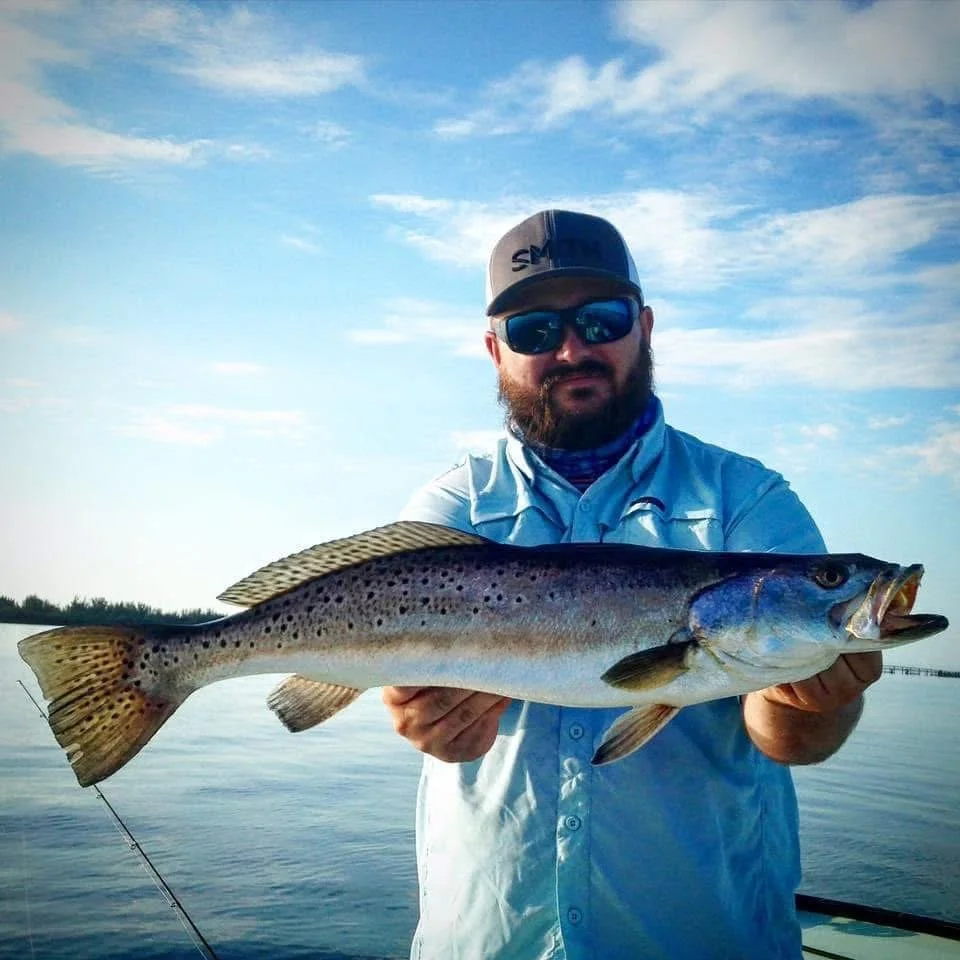
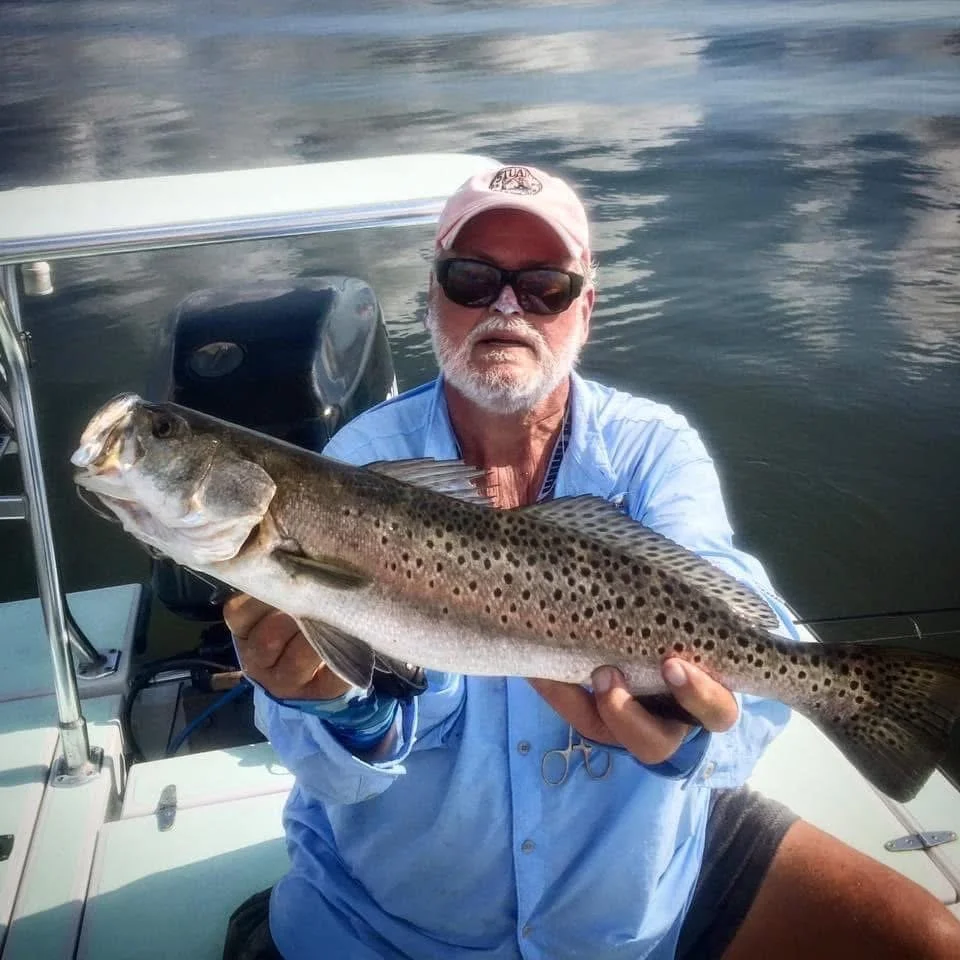
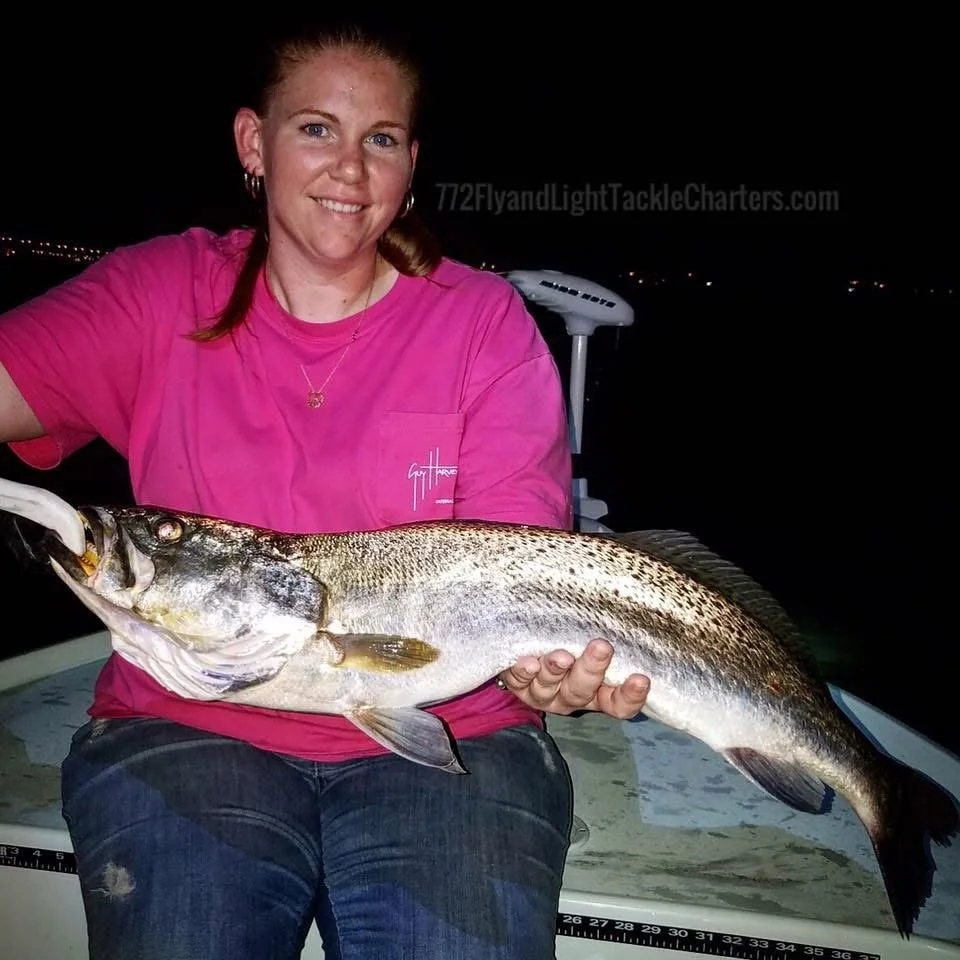
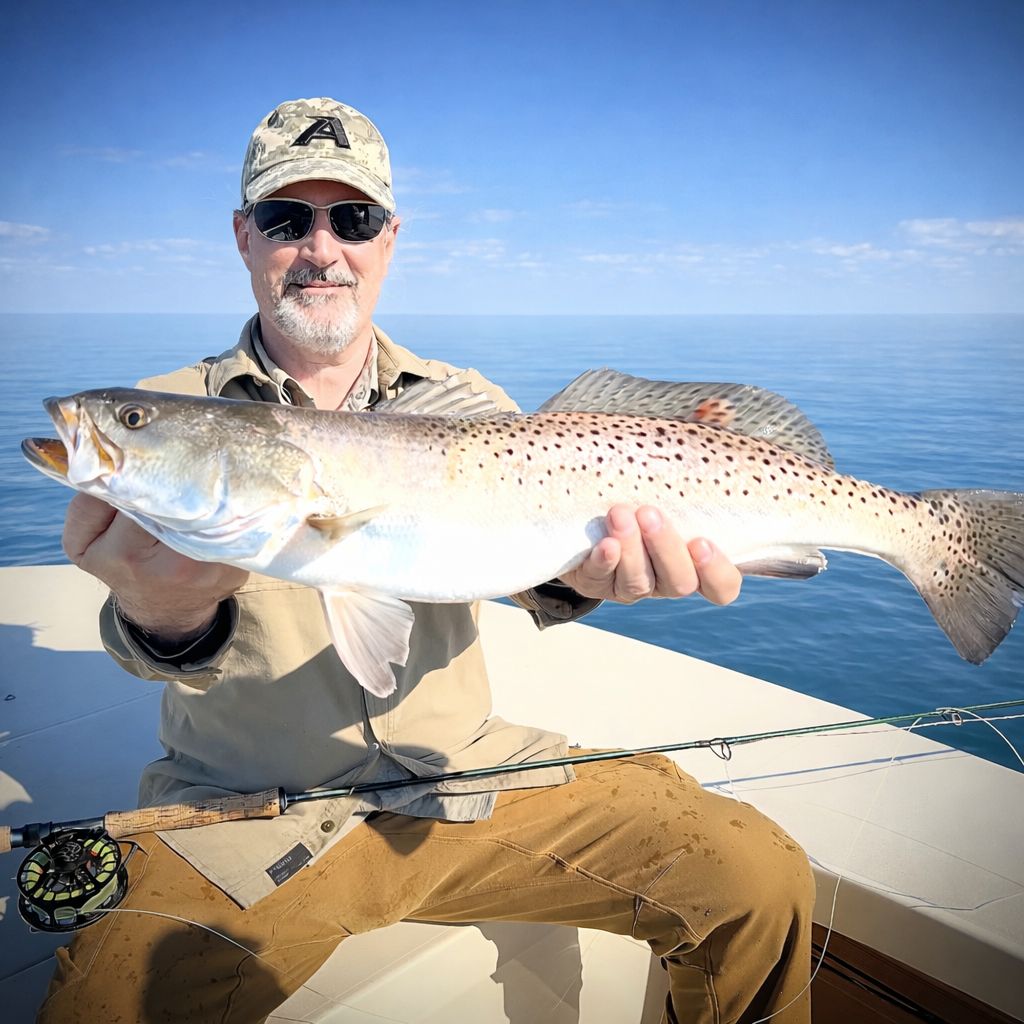
Another fish I expect to become increasingly important during October is the spotted sea trout.
As we work north, areas of healthy grass can hold good numbers of trout.
Early in the morning, trout may be willing to feed higher in the water column. This gives us opportunities with unweighted baitfish patterns and occasionally surface flies.
As the sun gets higher, I’ll generally begin working slightly deeper.
Small baitfish, glass-minnow and shrimp patterns can all be extremely productive.
One of the biggest clues is bait.
If we’re seeing concentrations of glass minnows around healthy grass, I’m going to spend some time there.
Trout are often not alone, either.
Snook, jacks, ladyfish and occasionally redfish can all occupy the same general areas.
That makes grass-flat fishing a great option for someone who wants to get a lot of shots and experience several different species on fly.
JACK CREVALLE — DON’T OVERLOOK THEM
Jack crevalle may not receive the attention that snook, tarpon and redfish receive, but from a pure fly-fishing standpoint they are one of the most entertaining fish we have.
And October can be an excellent month for them.
If you’re looking at a school of mullet suddenly erupting across the surface, there is a very good possibility that jacks are involved.
They eat aggressively, pull extremely hard and don’t require a perfect presentation.
When we’re targeting snook and tarpon, jacks can sometimes be considered bycatch.
But put an angler behind an appropriately sized fly rod and let a good jack eat a fly at full speed, and that attitude changes pretty quickly.
They are an outstanding gamefish on fly.
WHAT FLY RODS SHOULD YOU BRING?
For most October fishing from Jensen Beach through Wabasso, an 8-weight fly rod is one of the most versatile tools you can have.
An 8-weight is excellent for trout, redfish, smaller snook and general-purpose flats fishing.
When we’re specifically targeting larger snook, bigger jacks or throwing larger mullet patterns, stepping into a 9- or 10-weight can make life considerably easier.
If we’re intentionally targeting large adult tarpon, that’s a different program altogether. Depending on the size of the fish, we may be reaching for an 11- or 12-weight.
The rod should match both the fish and the fly.
There is no reason to throw a 12-weight at 18-inch trout, and there is equally little reason to intentionally hook a triple-digit tarpon on an 8-weight simply to prove that it can be done.
PRESENTATION IS MORE IMPORTANT THAN THE FLY
Fly fishermen love talking about flies.
What color?
What pattern?
What size?
What material?
All of those things matter, but sometimes we spend so much time worrying about the exact fly that we overlook the most important part:
Putting it in the right place.
A perfectly tied fly presented poorly is still a poor presentation.
A relatively simple fly placed correctly in front of a feeding fish can be incredibly effective.
During October, I concentrate heavily on angle, distance, retrieve speed and anticipating where the fish is going—not where it was.
This becomes especially important when sight fishing.
Lead the fish.
Let the fly settle.
Make the first strip count.
EARLY OCTOBER VS. LATE OCTOBER
One of the most important things to understand about our October fishery is how quickly it can change.
Early October generally has more influence from the mullet run.
That means larger baitfish patterns, snook, tarpon, jacks and aggressive feeding situations.
As we move toward late October, cold fronts and cooler nights can begin changing the water temperature and bait situation.
We may start downsizing our presentations.
Shrimp become increasingly important.
Trout and redfish become a larger part of the daily program.
We can also begin seeing the early signs of some of our winter visitors moving into the Treasure Coast.
This is why October is such an exciting month.
We’re not locked into one fishery.
THE JENSEN BEACH TO WABASSO ADVANTAGE
One reason I enjoy working the stretch from Jensen Beach north through Fort Pierce, Vero Beach and Wabasso is the amount of different water available.
We have mangrove shorelines.
Grass flats.
Spoil islands.
Bridges.
Channels.
Docks.
Seawalls.
Protected backcountry.
And, when weather permits, access to the beaches and nearshore environment.
That allows us to adapt.
If one area is dirty from wind or rain, we can look for cleaner water.
If the mullet aren’t in one stretch of the lagoon, we can move.
If the snook bite isn’t happening, we can change gears and look for trout or redfish.
That’s an enormous advantage when you’re fly fishing.
FINAL THOUGHTS — OCTOBER FLY FISHING ON THE TREASURE COAST
October is one of those months where you need to come prepared for almost anything.
We could start the morning throwing a surface fly at snook feeding on mullet.
An hour later, we could be poling a grass flat looking for redfish.
By midmorning, we could be throwing a small baitfish pattern at sea trout.
And somewhere along the way, a school of jacks or a rolling tarpon could completely change the plan.
That’s October.
It’s a transition month, but it’s also one of the most diverse periods we have for fly fishing the Indian River Lagoon and Florida’s Treasure Coast.
The biggest keys to success are simple:
Find the bait. Pay attention to the tide. Fish the low-light windows. Match your fly to the available forage. Be willing to change locations and techniques. And above all, make the first presentation count.
For anglers interested in October fly fishing charters in Jensen Beach, Fort Pierce, Vero Beach or Wabasso, Florida, this is an excellent time of year to experience the Indian River Lagoon with a fly rod in hand.
Whether your goal is sight fishing for redfish, throwing mullet patterns at snook, hunting tarpon, working grass flats for sea trout or simply putting a bend in the rod with a hard-fighting jack crevalle, October gives us options.
772 Fly & Light Tackle Charters
Jensen Beach • Fort Pierce • Vero Beach • Wabasso, Florida
Fly Fishing • Light Tackle • Indian River Lagoon • Treasure Coast Fishing Charters