Modern Fly Fishing’s Biggest Problem: Nobody Wants to talk about!
I’ve been a full-time fishing guide since 2012, and over those years I’ve had thousands of anglers step onto my boat. I’ve fished with people of every age, background, experience level and budget. Some were complete beginners. Others told me they had been fly fishing for 20 or 30 years.
But there is one problem I see more today than ever:
Fly fishermen simply do not practice enough.
Fly fishing has exploded in popularity, and in many ways that’s great for the sport. The equipment is better than it has ever been. People are traveling farther, fishing incredible destinations and spending thousands of dollars on rods, reels, lines, guides, lodges and airfare.
But somewhere along the way, I think too many anglers started investing more money into fly fishing than time.
You can buy a $1,000 fly rod. You can put a $1,000 reel on it. You can book a $10,000 fishing vacation.
None of that equipment can make the cast for you.
Your Guide Cannot Make the Cast
This is probably the biggest misunderstanding I see on guided fly-fishing trips.
A good guide can find fish. We can understand tides, weather, current, bait movement and seasonal patterns. We can position the boat. We can select the fly. We can tell you the distance and direction. We can coach you through the presentation.
But when I say, “Fish at 11 o’clock, 50 feet—CAST!”, my job has reached a point where I physically cannot do anything else.
That cast belongs to you.
If the fly lands 15 feet short, 10 feet behind the fish or piles up in a ball of line, I cannot fix it from the poling platform.
And many saltwater opportunities happen incredibly fast. You may have only a few seconds to deliver that fly.
This isn’t just a guide’s opinion. Fly Fishers International calls accuracy the single most important saltwater casting skill and specifically recommends practicing quick casts, minimizing false casts and learning to perform in the wind before the trip.
Twenty Years of Fly Fishing Doesn’t Necessarily Mean Twenty Years of Casting
One conversation I’ve had countless times goes something like this:
“How long have you been fly fishing?”
“Twenty years.”
Then we start fishing and discover that most of those 20 years involved casting 15 or 30 feet across a trout stream a couple weekends each year.
There is absolutely nothing wrong with that. Trout fishing is an incredible sport.
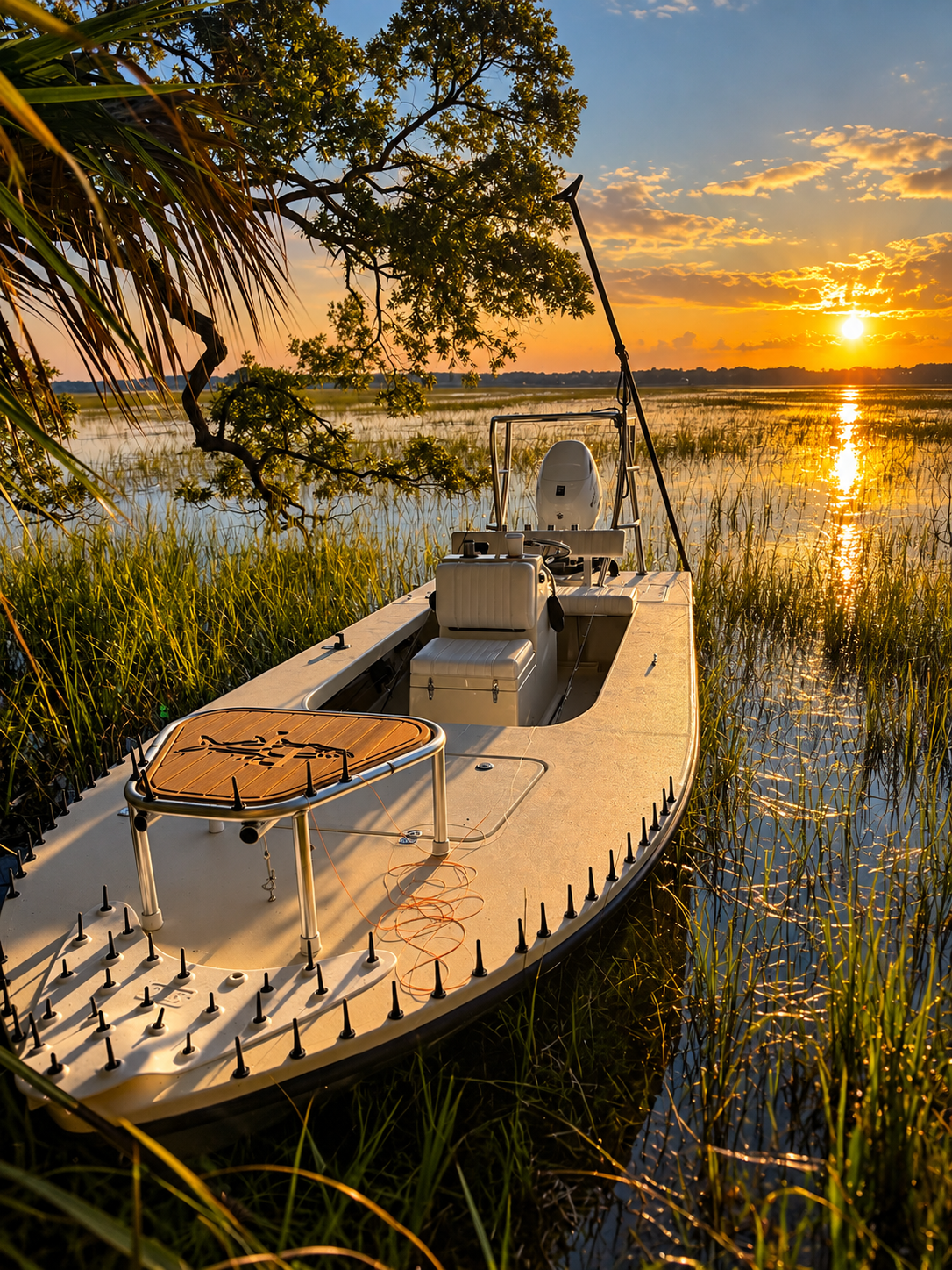
But it does not automatically prepare somebody to stand on the bow of a skiff and deliver a 50- or 60-foot cast accurately, quickly and into a 15-knot wind.
Saltwater exposes weaknesses in a cast immediately.
Fly Fishers International’s saltwater casting program specifically trains anglers to make accurate presentations from roughly 40 to 80 feet, deal with wind, control loops and safely cast from a skiff.
Those skills aren’t purchased.
They’re earned through repetition.
Fly Fishermen Should Think More Like Bow Hunters
I often compare serious fly fishing to bow hunting.
The similarities are incredible. Both require accuracy. Both involve opportunities that can develop quickly. Both can involve considerable money and travel. And in both sports, sometimes you get exactly one opportunity.
But there is one major difference I’ve noticed.
Dedicated bow hunters practice.
They don’t buy a bow in September, shoot three arrows and head into the woods expecting perfect performance. Serious bow hunters shoot hundreds of arrows. They learn their equipment. They practice different distances and angles. They shoot when they’re tired. They make sure that when the opportunity finally arrives, the mechanics are automatic.
Fly fishermen should approach casting the same way.
You don’t need to practice for three hours every day.
Give me 20 or 30 focused minutes a few times a week before your trip.
Put targets in the yard at 30, 40, 50 and 60 feet.
Don’t just see how far you can cast.
Hit something.
Practice with wind coming from different directions. Practice your backcast presentation. Practice picking up the line and delivering the fly with one or two false casts. Learn the double haul. Practice with the rod weight and a leader similar to what you’ll actually fish.
Most importantly, take a casting lesson.
Spending $100–$200 on instruction before spending thousands on a destination trip may be the best investment you make.
A Guided Fishing Trip Is Not a Casting Lesson
Can I improve your casting during a charter?
Absolutely.
Guides make adjustments all day long. We can correct timing, tighten loops, work on the double haul and help eliminate bad habits.
But there is a huge difference between fine-tuning a cast and teaching someone how to cast from scratch.
A $500, $600 or $800 charter is an incredibly expensive place to learn something you could have practiced in your backyard.
More importantly, while you’re learning, fishing opportunities are passing by.
The fish doesn’t care how expensive your equipment is.
The fish doesn’t care how many years you’ve called yourself a fly fisherman.
The fish doesn’t care how much the trip cost.
When that fish appears, you have to make the cast.
That’s part of what makes fly fishing so difficult—and so rewarding.
So before your next guided trip, spend a little less time shopping for equipment and a little more time standing in the yard with a fly rod.
Because your guide can find the fish.
Your guide can position the boat.
Your guide can tell you exactly where to put the fly.
But eventually, somebody has to make the cast.
And that somebody is you.